How to Talk to Your Muslim Parents About Mental Health

You are struggling. You know you need help. You have looked into therapy and found something that feels right. And then you think about telling your parents. And something closes. Because you already know how it might go. The dismissal. The “we did not have these problems.” The worry that you are bringing shame. The fear that they will think you are blaming them.
This article is for every Muslim who has ever navigated that gap between knowing they need support and being able to talk about it with the people who raised them.
Why this conversation is genuinely hard
It is easy to frame the difficulty as purely a matter of parental ignorance or stigma. And stigma is real. But the conversation is hard for reasons that go deeper than that, and understanding those reasons helps you approach it with more compassion and more strategy.
Your parents likely survived real hardship without language for it. Many first and second-generation Muslim parents came from countries where survival took priority, where psychological suffering was either an unaffordable luxury to name or an expected part of life. They did not have access to the vocabulary, the frameworks, or the permission to understand their own inner worlds as something requiring attention. They coped, because they had to. When their child says they are struggling, it can land as a comment on the life they provided, which is not what is meant, but is what is heard.
Mental health is culturally coded as weakness and as private family business. In many Muslim communities, psychological difficulty is something managed within the family or not discussed at all. What happens inside the home stays inside the home. The idea of discussing your inner life with a stranger, a professional no less, feels both unnecessary and potentially humiliating.
The religious response is their default. “Make du’a.” “Read Quran.” “Be patient.” “Go to the imam.” These are not dismissals, even when they feel like dismissals. They are genuine attempts to help using the framework your parents trust most. The problem is not that the response is malicious. The problem is that it can feel like it ends the conversation before it begins.
Before the conversation: what to get clear on first
Know what you actually need from this conversation before you have it. Are you looking for their permission? Their financial support? Simply for them to know? To not have to hide it anymore? Your goal shapes everything: what you say, how much you share, what success looks like.
If you need their blessing but know it is unlikely to come, consider whether you actually need it or whether you just want it. You are an adult. You can access professional support without parental approval. Sometimes the healthiest thing is to get the help you need and have the conversation with your parents once you have stabilised enough to have it from a stronger position.
If you live at home and need their practical support, or if they will inevitably find out, then the conversation becomes more necessary and the strategy matters more.
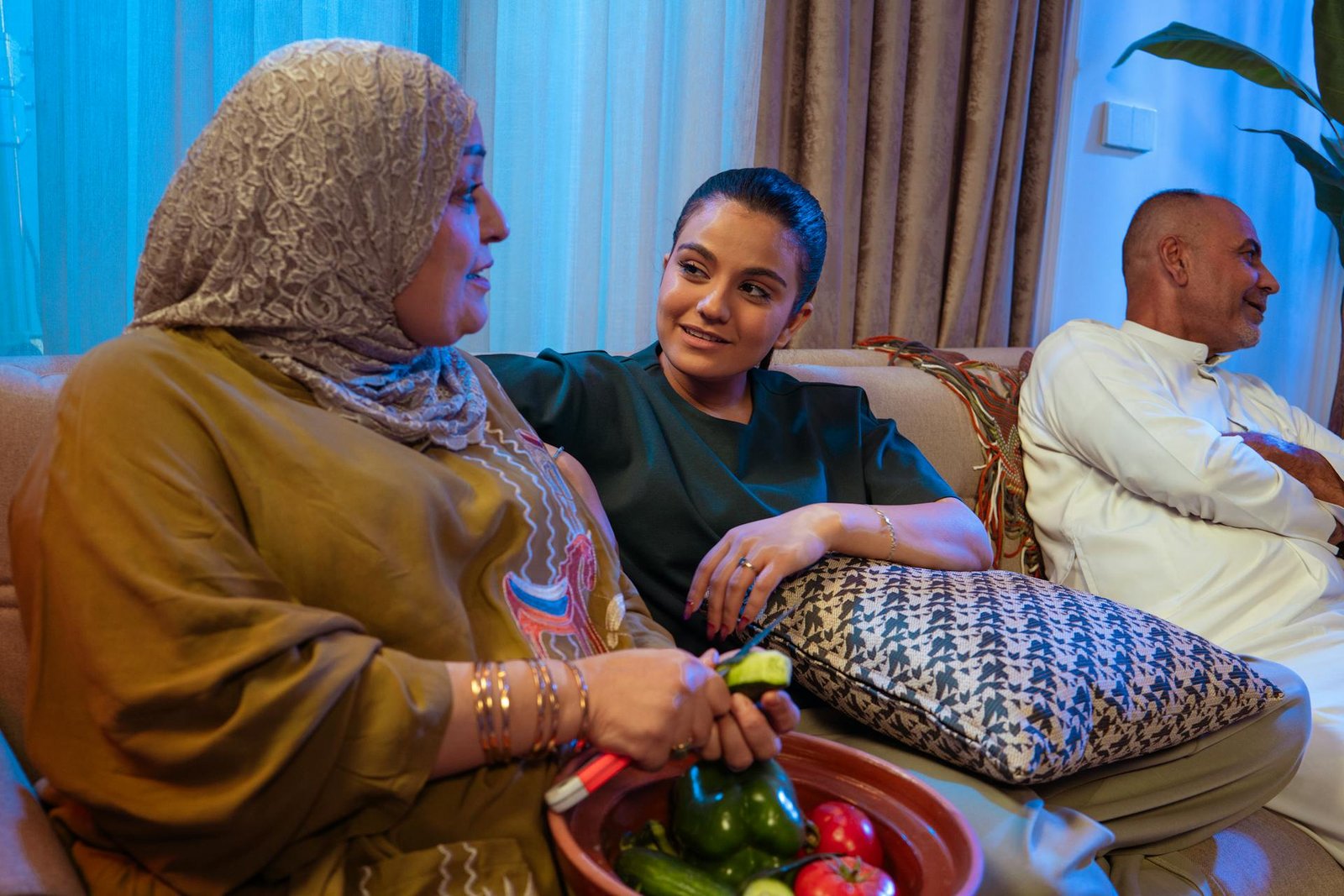
How to frame the mental health conversation with parents
Use Islamic language, not clinical language. “I think I need therapy” is harder for many Muslim parents to hear than “I have been struggling and I want to make sure I am taking proper care of myself so I can fulfil my responsibilities to Allah and to this family.” Both are true. The second framing is more likely to land.
Ground it in seeking help, not in pathology. “I am broken and need fixing” triggers defensiveness. “I am going through something difficult and I want support so I can come through it well” is easier to hear. It is also more accurate.
Link it to their faith, not against it. The Prophet (peace be upon him) sought the counsel of his companions. He consulted Khadijah when he was disturbed by the first revelation. He took the advice of others in matters of difficulty. Seeking counsel is a Sunnah. Ruqyah is a valid tool. So is psychology. They are not opposites.
If they worry you are blaming them, address it directly. “I am not telling you this because I blame you for anything. I know you did your best and I am grateful for everything you have given me. I am telling you because I trust you and because I did not want to hide this from you.” Saying this explicitly, before they raise it, takes it off the table as a defence mechanism.
Do not make it a debate about whether therapy works. You will not win an argument about the validity of psychology with someone who has never engaged with it. You do not need to win it. You just need them to not actively stand in the way.
What to do if it goes badly
It might. Be prepared for that. A bad first conversation does not mean the door is permanently closed. It means you have planted a seed that needs time. Many people find that after the initial difficult conversation, their parents quietly come around as they see the positive effect of therapy over time.
If the conversation results in significant conflict, do not double down in the moment. Say something like: “I understand this is not what you expected to hear. I do not need you to agree right now. I just needed you to know.” Then give it time.
If your parents’ response is actively harmful, if they threaten consequences, if they use the conversation as a weapon against you, that is important information about the dynamics at play in your family. A good therapist can help you navigate that too.
What to do if they ask too many questions
You do not owe anyone the details of your therapy. Not your parents, not your siblings, not extended family. What you choose to share is your decision. “I am working through some things with professional support” is a complete and sufficient answer. You do not have to explain what things. You do not have to justify your choice. Maintaining appropriate privacy around your mental health is not dishonesty. It is healthy self-protection.
A note on the parents who surprise you
Many people who dread this conversation are genuinely surprised by how it goes. Parents who seemed like the last people who would understand sometimes respond with relief, with their own story of silent struggle, with gratitude that their child trusted them enough to share. Do not assume the worst before you have given them the chance to show you who they are now.
And if they do surprise you, if they respond with openness and support, let them in. The isolation that mental health struggles create in families is its own kind of damage. A parent who finally understands what their child has been carrying can be one of the most healing relationships there is.
You do not need permission to take care of yourself
Our Islamic counsellors understand the specific dynamics of Muslim families and can support you in navigating both your own wellbeing and your family relationships. Matched within 48 hours, fully confidential.

